






Festival of Learning 2026

I Workshop on AIED Unplugged

Connect with the largest AIED community in the Global South through the Workshop on AIED Unplugged. This half-day (1:00 pm - 06:00 pm) workshop brings together researchers, educators, and practitioners to design, implement, and evaluate offline-first, low-skill, shared-device AIED solutions that connect innovation to actionable policy roadmaps.

Student engaging with AIED Unplugged learning tools
Workshop starts in
00days
:
00hrs
:
00min
:
00sec
June 28
Workshop day, 2026
Half Day
01:00 pm - 06:00 pm
Call for Participation

Who we welcome & ours aims

We welcome broad international representation, with active encouragement of contributions from traditionally underrepresented regions, particularly the Global South.


Connect with us
Researchers
AIED, EDM, and Learning@Scale
Students & Educators
Practitioners in learning contexts
Industry & NGO Representatives
Organizations deploying EdTech
Policymakers & Stakeholders
Connecting innovation to policy
Synthesize
Offline-first, low-skill, shared-device practices for equitable learning
Examine
Evidence from real cases (e.g., math and writing assessment via low-cost capture and offline analysis)
Connect
Leapfrogging and innovation to policy roadmaps in underserved contexts
Co-create
A prioritized research and policy agenda for underserved contexts worldwide
Programme

Panel Sessions

1
Designing for the Edge: Making AI Accessible for Low-Infrastructure Environments
Critiquing the "Cloud-First" paradigm, this panel proposes a sociotechnical framework for Technological Frugality — discussing resilient, offline-capable architectures that function on legacy hardware, prioritizing institutional autonomy and digital sovereignty.
Panelists
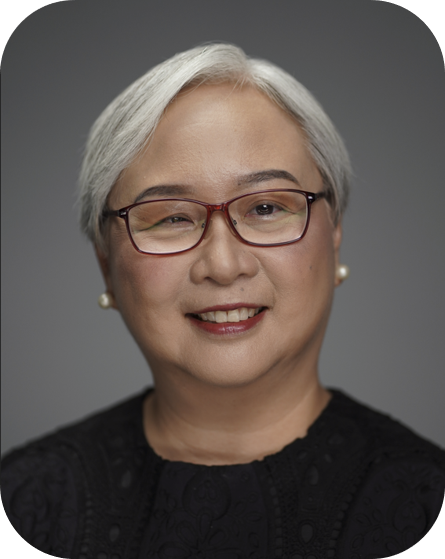
Maria Mercedes
Maria Mercedes T. Rodrigo

Professor at the Department of Information Systems and Computer Science. Head of the Ateneo Laboratory for the Learning Sciences and co-lead of the Ateneo Virtual, Augmented, and Mixed Reality Laboratory. Her research focuses on artificial intelligence in education, learning analytics, and educational games.

Samuel Addington
Samuel Addington

Specialist in computer science and cybersecurity, focused on the secure and practical adoption of AI in education. His work provides a critical foundation for discussing Technological Frugality and the design of resilient, offline-capable architectures, with a focus on governance patterns and practical labs for diverse learners.

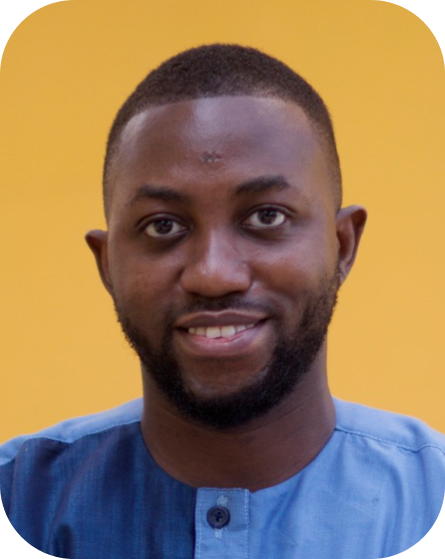
George Boateng
George Boateng

Computer scientist and social entrepreneur recognized by Forbes 30 Under 30 and MIT Technology Review. Co-founder of Kwame AI, pioneer of SuaCode (coding education on smartphones). PhD in Wearable AI from ETH Zurich, experience at Amazon (Alexa AI), and co-lead of the AfricAIED initiative.

2
Bridging the Learning Gap: Applying AI for Foundational Literacies
Addressing the persistent learning crisis in the Global South, this panel evaluates AIED Unplugged tools for immediate feedback and personalized pacing to accelerate recovery of basic competencies without deepening technological dependency.
Panelists
Alexandra Cristea
Alexandra I. Cristea

Globally recognized leader in AI and educational technologies, dedicated to advancing science for social good. Led projects such as TechUP Brazil. UNESCO expert and advisor to international policy-making bodies, with a unique perspective on how AI can accelerate the recovery of foundational literacies in infrastructure-constrained contexts.

Olga Viberg
Olga Viberg

Associate Professor at KTH and President of EATEL. Her research focuses on human-AI support for literacy development in children and autonomous learning. Editor-in-Chief of the International Journal of Learning Analytics, with significant contributions to UNESCO policy on teachers' AI competency development.

3
Personalization for Equity: Inclusive AIED Solutions
Exploring AI personalization as a mechanism for equity, focusing on marginalized groups including students with disabilities, refugees, and those facing mental health challenges — treating human diversity as the central axis of development.
Panelists
Aidan Friedberg
Aidan Friedberg

Over 10 years developing and implementing AI for education in low and middle income contexts. Interim Chief Science Officer at EIDU, working with over 15,000 schools across Kenya, Nigeria, and Rwanda. Focused on developing offline-compatible AI systems that accelerate significant learning outcomes (0.53SD impact).

Houda Aljadiry
Houda Aljadiry

PhD Candidate in Educational Sciences at Ibn Tofail University. Doctoral research focuses on language optimization for children with Autism Spectrum Disorder using Artificial Intelligence. Particularly interested in AI personalization as a lever for educational equity for learners with disabilities and other marginalized groups.

4
Co-Creation of Prioritized Agenda for Global South (2026–2028)
Collective construction of a strategic agenda for AIED Unplugged in the Global South — identifying and prioritizing applied R&D opportunities oriented toward reducing inequalities and generating concrete short-term evidence for scalability.
Panelists
Ricardo Madeira
Ricardo Madeira

Education economist and policy evaluation expert. Ph.D. in Economics from Boston University, Professor at USP (FEA-USP), and Manager of Educational Management Development at the Instituto Unibanco. Former consultant to the World Bank and the Inter-American Development Bank, with extensive experience in evaluating educational policies and identifying R&D opportunities that translate evidence into scalable interventions and measurable short-term impact.

Roberto Maldonado
Roberto Martinez-Maldonado

Associate Professor at Monash University and Director of the Centre for Learning Analytics (CoLAM). Research at the forefront of socio-technical issues surrounding AI in education, promoting human-centred methodologies for data-intensive interfaces with integrity and in constrained contexts.

Yu Lu
Yu Lu

Deputy Dean at BNU and Director of its AI Lab. PC Co-Chair for AIED 2025, editorial roles at IJAIED and IEEE TLT. Expertise instrumental for identifying R&D opportunities and "quick wins" that address structural constraints, ensuring AI-driven educational solutions are scalable and oriented toward reducing social inequalities.

Closing Panel: Building the AIED Unplugged Consortium
Transitioning from dialogue to structured collective action. Insights gathered across all sessions are consolidated into a formal commitment and research agenda for the global AIED Unplugged community.
Closing Panelist
Ig Ibert Bittencourt

Professor at Federal University of Alagoas (Brazil) and UNESCO Unitwin Chair on AIED Unplugged. Co-founded the Center of Excellence in Social Technologies (NEES), designing and implementing policies for the digital transformation of education in Brazil and across Latin America with a strong focus on AI. Dedicated to enhancing both learning outcomes and equity.

Open to all

Collaborative Article

We invite researchers, educators, and practitioners interested in AI in Education for low-infrastructure contexts to join a collaborative position article with light empirical grounding. The article will synthesize evidence, tensions, and emerging consensus on how AIED can support learning equity in the Global South through offline-first, low-skill, and shared-device solutions. If you are interested in contributing to a collective agenda for more accessible, just, and context-aware AI in education, we would be glad to have you on board.

Survey QR Code
Scan to participate
Location

The Venue

📍
Address
144-27 Samseong-dong, Gangnam District
Seoul, South Korea
🏛️
Venue
Elice · Co-located with Festival of Learning 2026
📅
Date & Time
June 28, 2026
1:00 PM – 6:00 PM (KST)
Open in Google Maps →
Team

Organisation

Workshop Chairs
Ig Ibert Bittencourt Federal University of Alagoas · ig.ibert@ic.ufal.br
Seiji Isotani University of Pennsylvania · sisotani@upenn.edu
Thomaz Edson Veloso IA.Edu Institute · thomaz.veloso@iaedu.org.br
Carlos dos Santos Portela Federal University of Pará · csp@ufpa.br
Organizing Committee
Emanuel Marques Queiroga INCT IA.Edu / UTFPR · emanuelmqueiroga@gmail.com
Maúna Soares de Baldini Rocha INCT IA.Edu / NEES · mauna.rocha@nees.ufal.br
Nicolas Yan Bittencourt Santana Pereira Federal University of Alagoas · nybsp@ic.ufal.br
Cristian Cechinel Federal University of Santa Catarina · cristian.cechinel@ufsc.br
Institutional Support

Partner Institutions

WAIEDU 2026 is supported by leading research institutions and funding agencies committed to AI in education and learning equity in Brazil and Latin America.